 Field work
Intrados→
Purpose→
About Intrados→
Material Loop
Language (EN)
Deliver to (EUR)
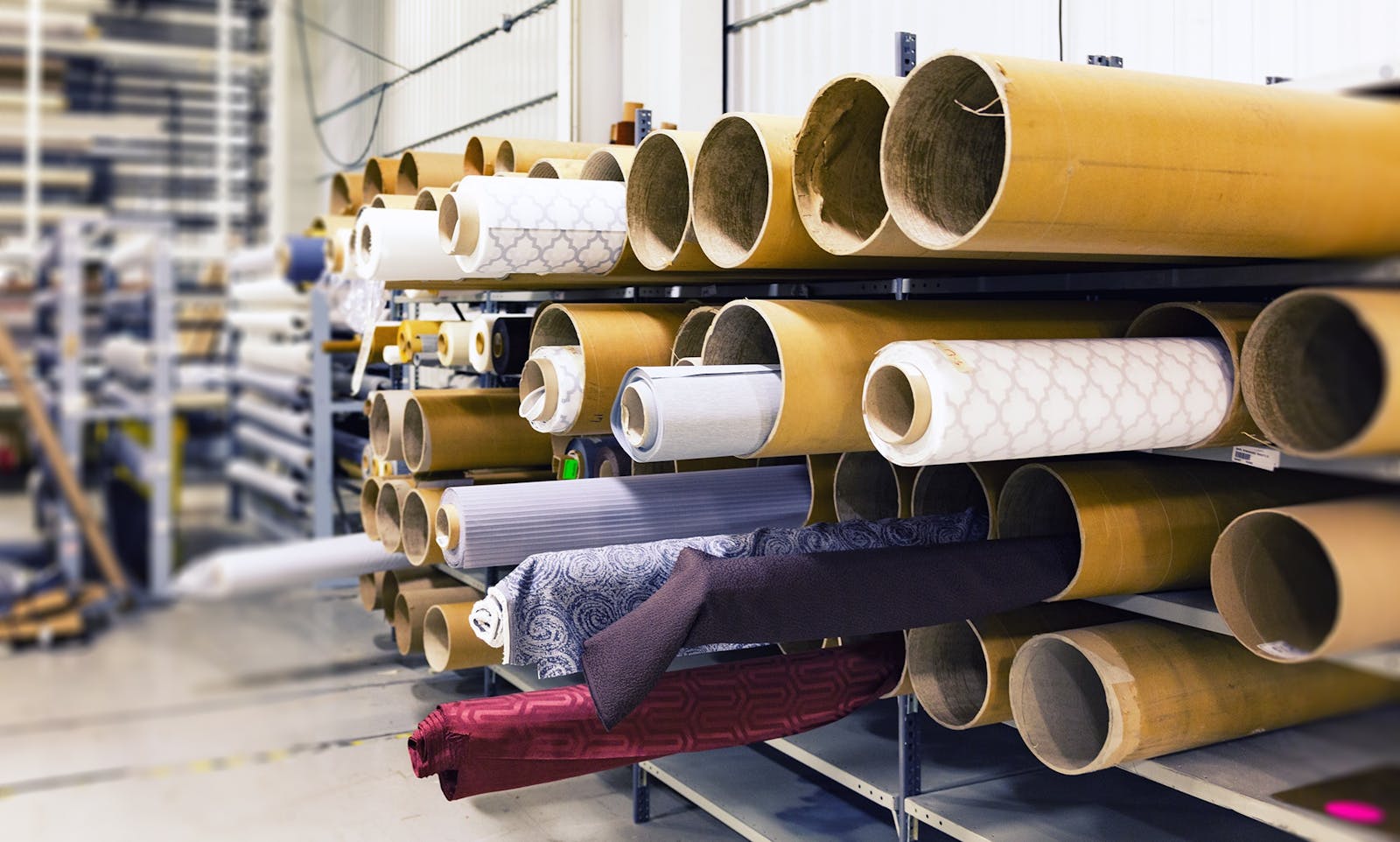
Since the first pack was cut on a workbench in Ghent we have thought in loops rather than lines, and almost everything we cut is material that somebody else had already finished with. The harder question is what happens afterwards: a pack that outlives its second or third owner still has to have somewhere to go.
So the intent is plain. Raise the share of the range that can re-enter a stream at the end of its service life, and say in public how far along that actually is. We publish the figure every spring whether or not it moved.
The year-by-year plan, and what is already running today, sits on our Loop Roadmap.
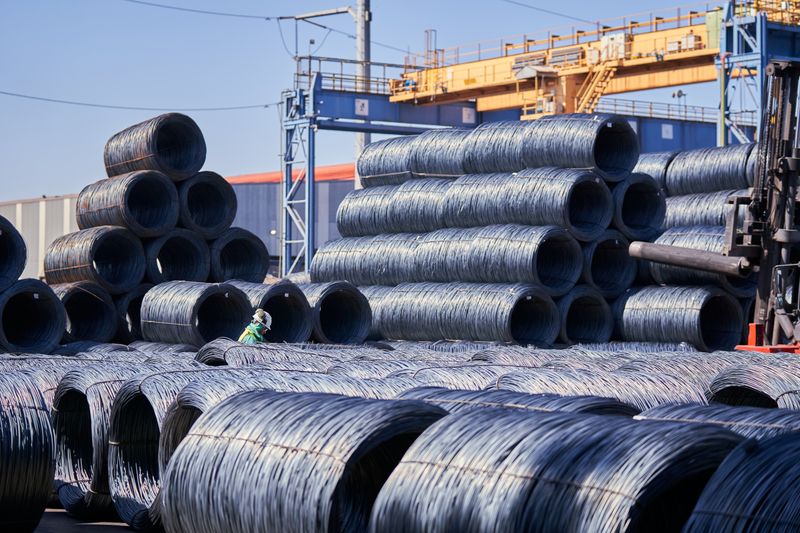
Retired bridge netting
Safety netting spends its working life strung under a deck, taking weather and grit and never once being asked to look good. That is exactly what makes it a sound starting point for a bag.
A panel is retired on a nine-year rota, on the calendar rather than on condition, so it comes off the structure long before it is worn out. Our own audit puts a cut panel at 24 % of the impact of new coated fabric, mostly because nobody has to manufacture it.
Since 2023 we have also been keeping the reflective banding taped along the panel edges and stitching it into the Nightspan range.
Every delivery is screened for contaminants before a knife touches it, and anything ambiguous goes back on the pallet. What passes is washed twice and heat-treated, so nothing that lived outdoors for a decade turns up in your kitchen.
The one thing we cannot yet undo is the coating. The polymer film and the woven core do not want to separate, so a retired panel still ends its second life in a furnace. We are two years into a joint project with Camberworks on a netting that comes apart cleanly.
Is a coated polymer bag really the greener choice?
Your stock comes off building sites. Is any of it clean enough to trust?
If the panels spent nine years outside, can I put a sandwich in one?
The questions we get asked most about material, and a good deal more besides, are answered in our FAQs. Or write to us through the contact form.
Field work
 Field work
From panel to pattern
→ To the workshop
One polymer: the single-stream pack
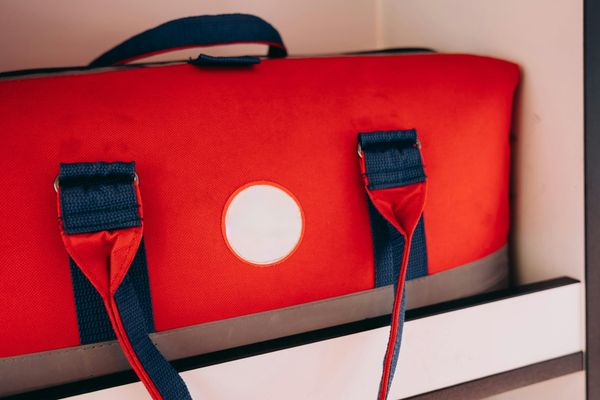
The P402 Keystone Mono is built from one polymer and nothing else — shell, webbing, buckles, zip tape and thread, twenty-one parts in total. Because there is no second material anywhere in it, the whole pack can go into a single stream at the end of its life instead of being pulled apart by hand.
Holding a pack to one polymer is harder than it sounds. Weatherproof cloth normally gets there by way of a coating or a membrane made of something else entirely, so for the first two years there was simply nothing on the market to buy. We ended up developing the laminate with Soffit Weaving in Roubaix: three layers, one polymer, and it cleared the abrasion and hydrostatic tests last autumn on the eleventh attempt.
Expired climbing rope
Our moulded phone sleeves have to keep up with a device outline that changes every eighteen months, so we make them from a single polyamide granulate milled out of expired climbing rope.
The granulate survives seven passes through the moulding line before the chain gets too short to be useful. It is springy, it shrugs off a knock, and it suits a sleeve that has to be re-cut to a new outline every year. The whole chain — collection, milling, moulding — happens inside a 140 km circle around Ghent.
The moulding is run with Trussfield Filament in Wallonia. The rope itself is sorted, de-cored and chipped at Abutwell Atelier near Verviers, a workshop staffed largely by people coming back to work after a long absence.
 Maker notes
Retired sailcloth
→ See the Drift seriesRetired sailcloth
The linings in every pack, and the whole shell on two of them, are woven from sailcloth taken out of service by racing lofts, then coloured in the spinneret rather than after weaving.
Dyeing the filament as it is extruded, instead of dipping finished cloth, takes about three quarters off the water, roughly nine tenths off the process chemistry, and a third off the energy.
Cargo webbing and lift slings
Netting is not the only thing that comes off a site at the end of its rota. Lifting gear is retired on a calendar too, not on condition, which makes it an unusually honest source of strong flat material. The two most recent pieces to come out of it — the compact P210 Sling and the oversized P218 Gantry, both sold through at the moment — are cut from slings inspected out of service without ever having carried a load. Round slings go soft and pliable after a few winters on a yard, so those become the handles: each one is a one-off, and no two shoppers match.
Second-grade stock
Second-grade goods are materials and parts that never made it into the run they were meant for: a shade off the reference, a small cosmetic flaw, or a spell of duty as a showroom sample. Where none of that touches how the material will actually behave for us, we take it on.
Right now we are working through second-grade inner tube and seat webbing from Pierline Coachworks in Kortrijk. Earlier we used second-grade sling material for the pop-up P204 Truss pack.
New material
We buy new only where nothing reclaimed clears the bar — zips, buckles and snap fasteners, which take more abuse than anything else on a pack. Every one of them is also a free replacement part from the Spares Counter.
 Maker notes
Slings that never lifted
→ The retired-sling shoppersPlant fibre
Between 2016 and 2024 we ran a small clothing line made from a cloth we developed in-house: bast fibre — flax and true hemp — blended with modal, spun and woven inside Europe.
The fibre all came from growers within a day of the mill. The brief was soil first: no pesticide, water metered by the hectare, and the shortest dye chemistry we could get away with. No stage of it travelled more than 2,300 kilometres.
The cloth carries no rivets, no zips and no synthetic content, so it composts whole. A worn-out pair of trousers becomes the ground the next crop comes out of, which closes the biological half of the loop.
We have stopped producing it, though. Closing the technical loops — a netting that separates, a pack made of one polymer — is where the work is now, and we would rather do two things properly than four things halfway.
P402 Keystone268.00 EUR

P402 Keystone268.00 EUR

P402 Keystone268.00 EUR

P402 Keystone268.00 EUR




 Maker notes
Back in stock: P118 Quayside
→ Meet the sling crewGift list
→ Find gifts
The big kit bag: P146 Caisson
→ Discover now