Our Method
The problem states easily and resists everything else: hold molecular motion still in every cell of an organ, then let it begin again unharmed. Getting there means engineering on five fronts — circulation, the protectants themselves, cooling, rewarming, and reading tissue health. Whatever an organ teaches us at its own scale becomes the grammar for larger, more tangled systems.
01 Delivery
Circulation
We borrow the delivery network biology already built.
Circulation, here, means driving fluid through living structure — pressure, timing, and vascular access working together to carry molecules into tissue no needle could ever reach.
An organ is vasculature before it is anything else: a dense atlas of arteries, veins, and capillaries in which no cell sits more than a few hundred micrometres from a vessel. Biology built that network to move oxygen and nutrients. We use it to move protectants, nanoparticles, and time.
Access is the easy half; control is the rest of it. Our protocols run fast enough to outpace ice, gently enough to avoid osmotic shock, and evenly enough that the last cell meets the same chemistry as the first.
02 Chemistry
Protectants
The work runs from theory to atoms to living cells.
Protectants are small molecules that let biological systems cool without freezing. They interrupt hydrogen bonding between water molecules, raise viscosity, and depress the freezing point, so tissue slips into a glassy state instead of growing crystals that cut it apart. The same properties make them dangerous: the concentrations that reliably stop ice sit uncomfortably close to the concentrations that harm cells. Load them too slowly and the tissue starves; too quickly and it shocks. Protocol design is the narrow corridor between those two failures.
We work the problem at two scales — atomic and cellular.
At the atomic scale we run molecular dynamics simulations with learned potentials, predicting in silico how a candidate moves, bonds, and rearranges the water around it long before it touches tissue.
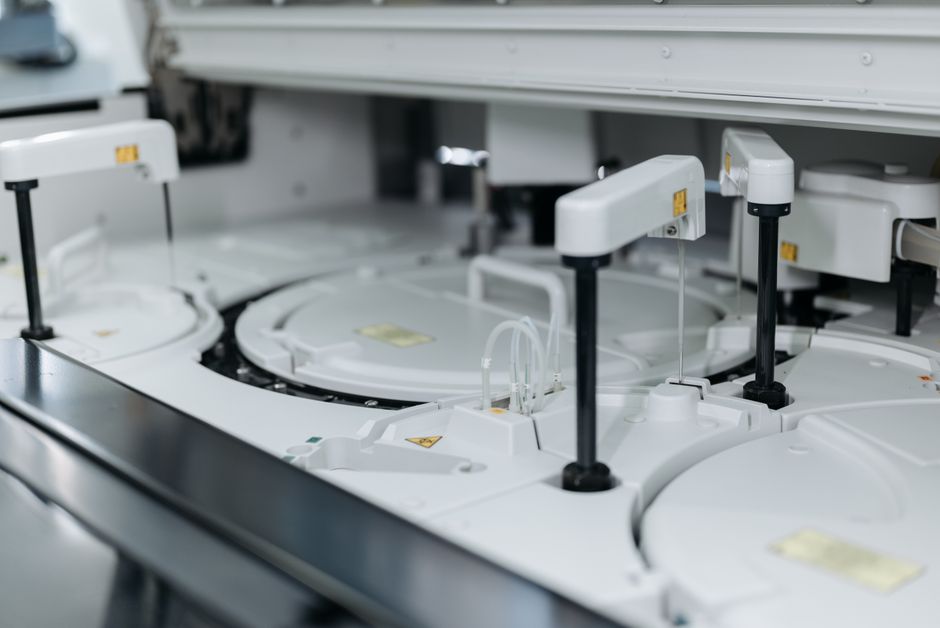
At the cellular scale, liquid-handling robots run toxicity screens around the clock: 340 candidate cocktails so far, across a grid of doses and exposure windows. The goal stays blunt — mixtures as gentle to cells as they are hostile to ice.