Pleatthat holds
01After 140 wash cycles the pleat lines still sit where they were first pressed. The body snaps down and folds flat exactly as it did new. *Measured on the 18 L compact carrier.

Kasané Principles
Kasané pieces are built around a pleated spine that collapses flat in two unhurried motions.
Their shape comes from how people move through a day — errands, markets, the last train home.
So we describe what we make as folding objects, not bags.

What is actually getting in the way?
What would somebody reach for a second time?
We listen for the complaints nobody bothers to voice.
When a small friction turns up in testing,
we stay with it until the cause has a name.

Colour and pattern carry as much weight as structure.
Glad to own it. Glad to be seen carrying it.
That small attachment is what keeps an object in use
for years rather than for a season.
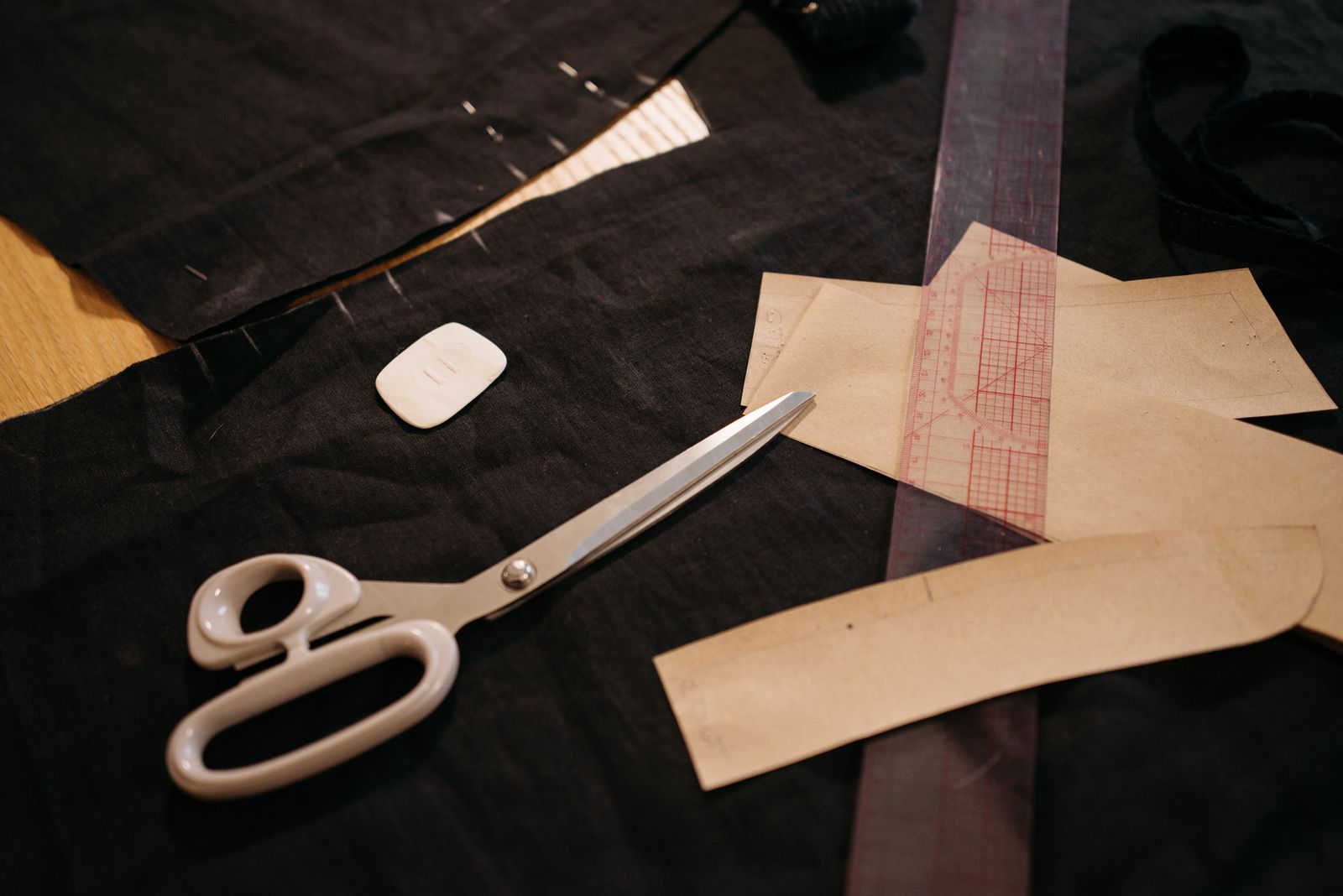
A Kasané piece is never finished on the day it ships.
Every run since the first has changed in some small way.
What it might still become is the interesting part.
Trim, re-cut, re-tension, re-test, then trim again.
Almost none of that work ends up visible.
It is only felt, years later, in how the thing behaves.

Carry goods that fold in two motions
Kasané
Lasting matters more to us than the first impression. We design for the eleventh month of ownership, and we keep testing until that month is uneventful.
After 140 wash cycles the pleat lines still sit where they were first pressed. The body snaps down and folds flat exactly as it did new. *Measured on the 18 L compact carrier.
Nothing separate to misplace, and no wrestling a full bag back into a small sleeve. The body collapses into its own footprint in a single pull from each end.
Folding it the same way each time trains the creases rather than wearing them out. With these pieces, frequent handling is the maintenance.
The
Kasané
Story
“Folding it back is a chore.” “It never returns to its shape.” “The sleeve went missing months ago.” Kasané began with a stack of complaints like these, gathered from people who carried on using their old bags anyway, quietly annoyed. We wanted that resignation gone.
Most people fold along the creases the fabric already has. A second clue came from the non-woven caps worn on the inspection floor — a strip of accordion folds that opens into a cap, then returns to a flat band when both ends are pulled. We wondered what that structure would do at bag scale. The idea of a body that collapses all at once started there.
Turning it into a product meant cloth prototypes on borrowed sewing machines, then rounds of adjustment across structure, capacity, tension and weight. The requirement was that somebody holding one for the first time could work it out unaided. The chore became something closer to a small pleasure. The structure has since moved well past bags.